
Christmas baking in Central Europe has its own rhythm — slow, fragrant, rooted in tradition. In both the Czech Republic and Slovakia, the four Advent Sundays guide the season like a gentle calendar. Each week brings a new aroma, a new recipe, and a new moment to pause.
This post contains affiliate links. If you purchase through them, I may earn a small commission at no extra cost to you.
The Rhythm of Advent Baking in Central Europe
1. First Advent Sunday – Gingerbread
The season begins with gingerbread. They’re baked first because they need time to soften. The warm mix of honey, cinnamon, cloves, and allspice sets the tone for the whole month.
Helpful tools:
- Christmas cookie cutters — perfect for traditional shapes (stars, hearts, bells).
See options on Amazon - Non-stick baking mats to make cleanup easier.
See options on Amazon
2. Second Advent Sunday – Vanilla Crescents & Linzer Cookies
This is when the classics appear:
- Vanilla crescents
- Linzer cookies filled with jam
They’re buttery, aromatic, and perfect for filling Christmas tins.
Useful baking basics:
- Quality vanilla sugar or real vanilla powder for better aroma
See options on Amazon - Fine nut grinder for perfectly smooth ground nuts. I use a cheese grater like this one on amazon
See options on Amazon
3. Third Advent Sunday – Bear Paws & Family Classics
The third week is for baking more complex or deeply traditional cookies: bear paws, cocoa cookies, nut biscuits, or whatever your family recipe book dictates.
Helpful item:
- European-style baking molds for bear paws and other shapes
See options on Amazon
4. Fourth Advent Sunday – Decorating & Filling
By the final Sunday, the tins are full.
This day is for:
- assembling Linzer cookies with jam
- decorating gingerbread
- filling cookies with creams
- finishing small details
It’s slow, cozy work often done with carols, candlelight, and a sense of ceremony.
Christmas Week – Vánočka and Festive Desserts
Right before Christmas comes the iconic vánočka — a braided loaf with raisins and almonds. Many families also prepare traditional desserts like:
- honey creme pie
- honey layer slices
- meter cake
- or other long-loved favourites
And now—into the heart of this post.
Traditional Vanilla Crescents
These cookies are delicate, buttery, and gently nutty — a perfect example of understated Central European holiday baking.
Ingredients
- 960 g (≈ 7 ⅔ cups) all-purpose flour
- 600 g (≈ 2 ⅔ cups — or about 5.3 standard US butter sticks) butter (or plant-based baking fat)
- 100 g (≈ 1 cup) finely ground nuts (walnuts or hazelnuts)
- 200 g (≈ 1 cup) sugar
- Powdered sugar + vanilla sugar for coating
Instructions
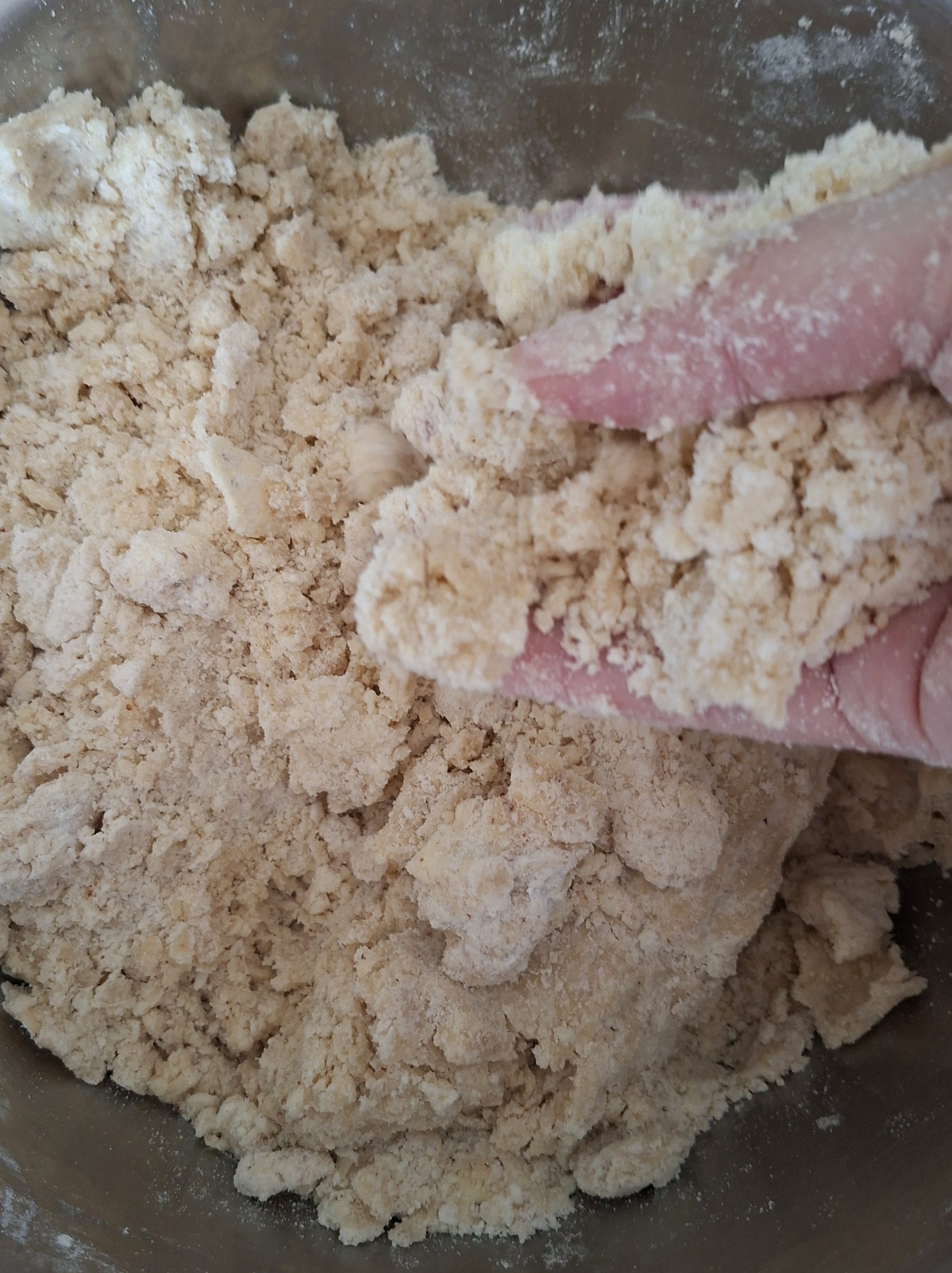
1. Mix the Dough
Combine all ingredients and knead into a smooth dough. Do not be afraid if it takes a while to combine. It needs similar approach as shortcrust pastry.
If too soft, refrigerate for 20–30 minutes.
2. Shape the Crescents
Form small ropes and curve them into crescent shapes.
Try to keep them uniform — they bake more evenly.

3. Bake
- 170 °C (340 °F)
- 10–12 minutes
- They should stay pale with only slightly golden tips.
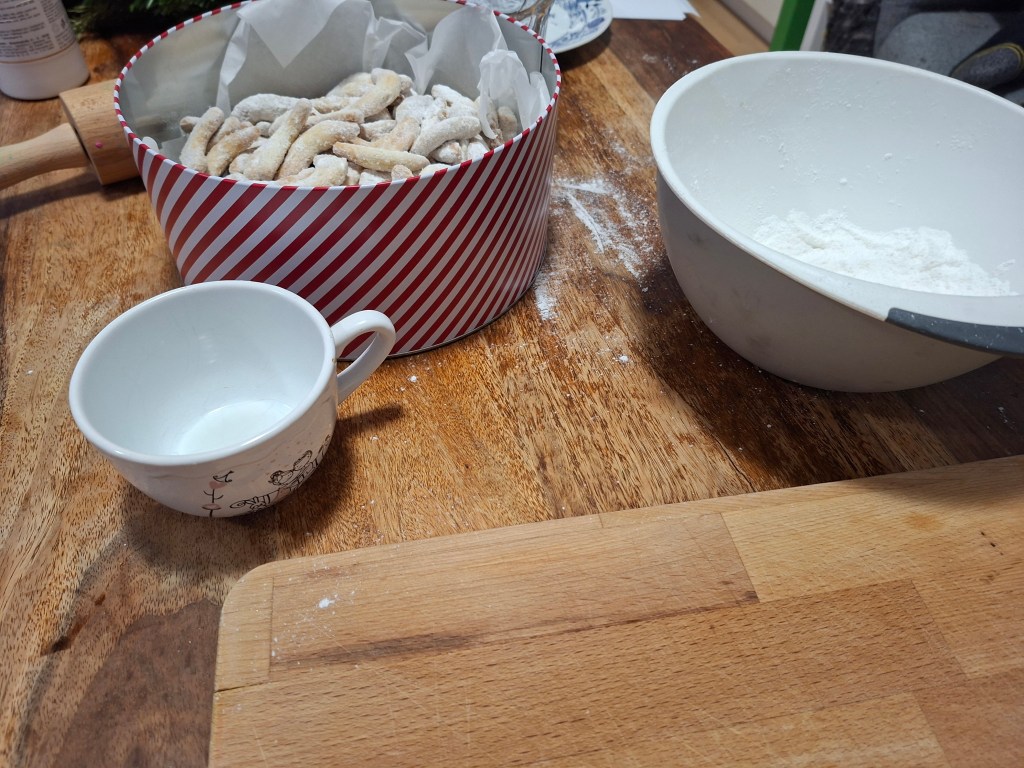
4. Coat in Sugar
Roll the warm cookies gently in powdered sugar mixed with vanilla sugar.
Warm cookies absorb the sugar better.
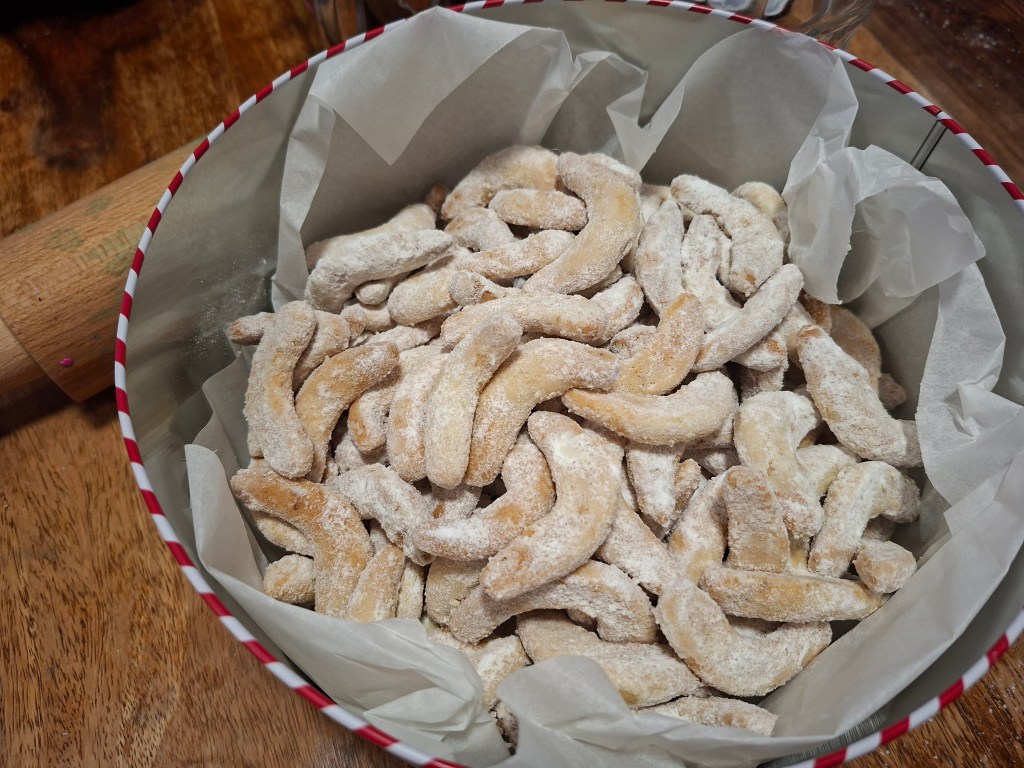
5. Let Them Rest
Store the crescents in a tin for a few days.
The flavor deepens and the texture becomes beautifully tender.
Final Thoughts
Advent in Central Europe is not a rush — it’s a ritual.
Week by week, the kitchen fills with scents that feel like home: honey, vanilla, walnuts, and warm butter. Vanilla crescents belong to this rhythm, and making them is a way to slow down, connect with tradition, and welcome Christmas in a gentle, grounded way.

Pridaj komentár